Miami’s place in the 2026 FIFA World Cup is not just a tourism story, a stadium story, or a month-long celebration for international soccer fans. For Florida college soccer recruiting, it could become something much more useful: a visibility engine.
Hard Rock Stadium, listed by FIFA during the tournament as Miami Stadium, is scheduled to host seven World Cup matches in 2026, including group-stage games, a Round of 32 match, a quarterfinal, and the third-place playoff. That gives South Florida one of the most valuable soccer spotlights in the country. It also gives college coaches, youth clubs, high school players, and recruiting families a rare chance to connect local development with global ambition.
Florida already has the raw ingredients. The state has year-round weather, deep athletic talent, major youth soccer participation, strong immigrant soccer culture, and established college programs across different levels. What the World Cup adds is urgency. It gives players a reason to dream bigger, clubs a reason to organize better, and college programs a reason to recruit more aggressively inside their own backyard.
The question is not whether Miami will host a major event. That part is already clear. The question is whether Florida’s college soccer ecosystem can turn the World Cup stage into a stronger recruiting pipeline.
Miami Gives Florida Soccer A Global Recruiting Window
College recruiting is often shaped by visibility. Coaches need to see players. Players need platforms. Families need information. Clubs need relationships. When a market becomes a global soccer destination, every layer of that process can become more active.
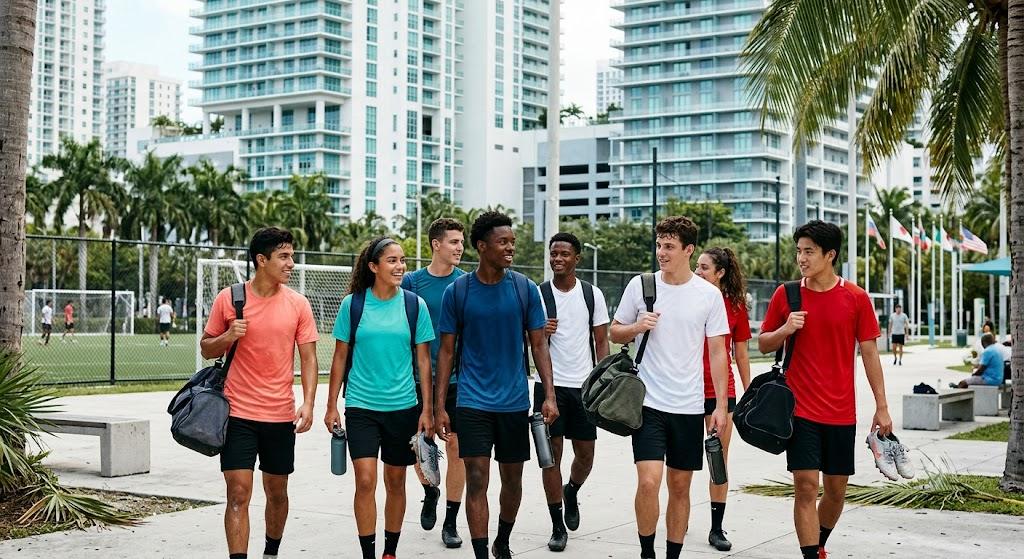
Miami’s World Cup role matters because it places Florida in the center of the soccer conversation during the most watched tournament in the sport. The official Miami World Cup host city profile reinforces what makes the market valuable: international identity, cultural energy, and a deep connection to the global game.
That connection can help Florida college programs recruit more intelligently. Coaches at schools such as FIU, Florida Atlantic, UCF, USF, Florida Gulf Coast, Stetson, North Florida, Florida State, Florida, and Miami already understand the state’s athlete base. The World Cup may push more local players to stay in the sport longer, train more seriously, and view college soccer as a realistic bridge between youth competition and higher-level opportunity.
For recruiting, that matters. A larger, more motivated player pool gives college coaches more options. It also increases competition for roster spots, scholarships, walk-on opportunities, and developmental roles.
The Local Player Pool Could Get Deeper
A World Cup host market usually experiences a surge in soccer attention. In Florida, that attention could reach players who are already athletic but not yet fully committed to soccer. The state has always been loaded with multi-sport talent. The challenge for soccer has been keeping gifted young athletes engaged long enough for technical development to catch up with athletic ability.
That is where Miami’s stage becomes important.
A 13-year-old watching Brazil, Portugal, Uruguay, Colombia, Scotland, Saudi Arabia, or Cabo Verde play in Miami may not suddenly become a college prospect overnight. But that player may join a club, take training more seriously, attend more camps, or ask better questions about college pathways. Over time, those small decisions matter.
Florida college soccer recruiting does not need the World Cup to create finished players immediately. It needs the tournament to expand the number of players who see soccer as a serious long-term path.
| Recruiting Factor | How The World Cup Could Help | Florida College Soccer Impact |
|---|---|---|
| Player motivation | More young athletes see elite soccer locally | Better long-term commitment |
| Club participation | More families enter organized soccer | Larger recruiting base |
| Showcase interest | More events tied to World Cup energy | More evaluation opportunities |
| Coaching standards | More pressure for better training | Improved technical development |
| College awareness | More families ask about pathways | Stronger recruiting conversations |
This is where the World Cup becomes more than entertainment. It can influence the development choices that shape recruiting classes years later.
Florida Colleges Need To Own The Local Conversation
The programs that benefit most will not be the ones that simply wait for better players to appear. They will be the ones that show up early.
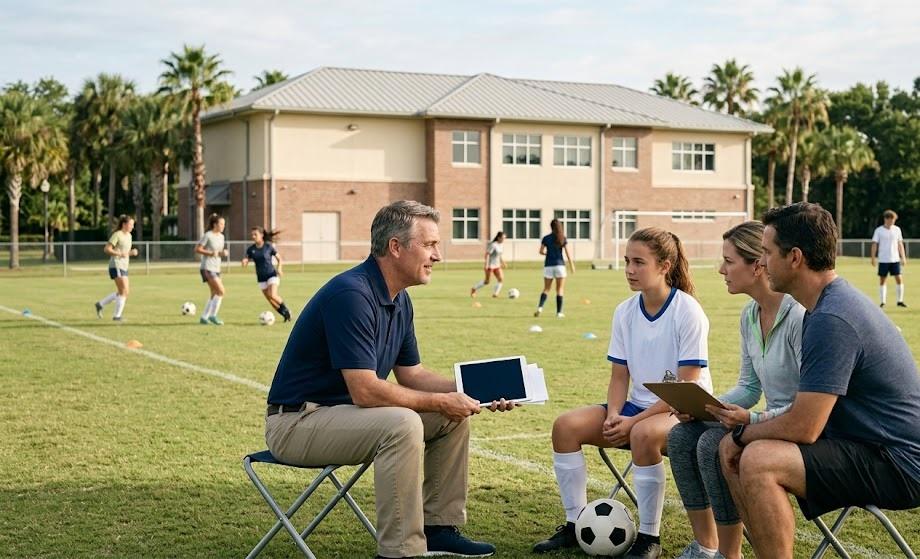
College staffs should treat the 2026 World Cup window as a relationship-building opportunity. That means connecting with club directors, high school coaches, youth tournament organizers, and local communities before the tournament creates its biggest wave of attention. Florida programs should also make recruiting education easier for families who may understand soccer but not the college process.
There is still a gap between youth soccer participation and college recruiting literacy. Many families know their child is talented. Fewer understand academic eligibility, video preparation, communication timelines, roster limits, camp evaluation, transfer rules, and the difference between Division I, Division II, NAIA, junior college, and club-level opportunities.
That is why FloridaSportsView’s broader Florida college sports guide matters in this conversation. The state’s college sports landscape is large and varied, and soccer recruiting fits inside that bigger ecosystem. The World Cup may create attention, but colleges must help families translate that attention into realistic planning.
Women’s Soccer May Feel The Recruiting Impact Fastest
Florida’s women’s college soccer scene already has national credibility. Florida State remains one of the country’s elite programs, and its 2025 NCAA women’s soccer championship reinforced the state’s ability to operate at the highest level. That matters because elite success changes perception.
When a state has a national-title program, younger players can see a clearer example of what top-end development looks like. It raises expectations for training habits, tactical discipline, physical preparation, and recruiting competitiveness. It also gives Florida-based prospects a standard to measure themselves against.
The World Cup in Miami could intensify that effect, especially for girls’ soccer. Major international events often create new emotional entry points for young female athletes, particularly when families begin to see soccer as a serious college pathway rather than only a youth activity.
Florida’s women’s programs are spread across major conferences and competitive regions. That gives prospects different choices depending on level, location, academic fit, playing style, and long-term goals. The more the World Cup grows soccer interest across the state, the more those programs can evaluate players from a stronger and more engaged development base.
Men’s Recruiting Could Benefit From South Florida’s Soccer Identity
On the men’s side, South Florida’s identity is especially important. Miami-Dade, Broward, and Palm Beach counties have a soccer culture that does not need to be manufactured. The sport already lives in parks, schools, clubs, futsal courts, immigrant communities, and weekend tournaments.
FIU and Florida Atlantic are two obvious programs positioned near that energy. UCF, USF, FGCU, Stetson, North Florida, and other Florida programs can also benefit if South Florida’s player pool becomes deeper and better organized after the World Cup.
The recruiting advantage is not just geography. It is style. South Florida players often grow up around different soccer influences, from Latin American creativity to Caribbean athleticism to European tactical culture. That mix can produce versatile players, especially when paired with structured coaching and college-level strength development.
The World Cup can make that identity more visible. It can also encourage more young players to take the college route seriously, especially if professional academy pathways are not the right fit or if families value education as part of the athletic journey.
Showcase Events Could Become More Important
The World Cup will likely create more demand for camps, clinics, showcases, and soccer festivals around Miami and across Florida. That can help recruiting, but only if those events are built with real evaluation value.
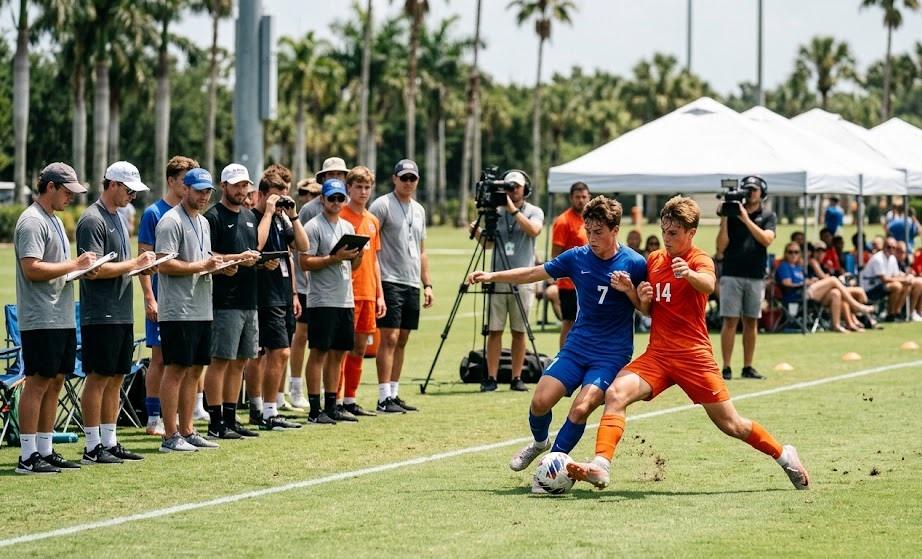
A useful showcase is not just a crowded field with college logos nearby. It needs competitive balance, accurate rosters, clear schedules, reliable video, communication between club and college coaches, and realistic feedback for families. Otherwise, the event becomes expensive noise.
Florida has a chance to do this better. World Cup energy can bring more players into the showcase environment, but the best events will be the ones that connect players with actual recruiting education.
For college coaches, these events can become efficient evaluation windows. For players, they can become opportunities to understand the speed, spacing, and decision-making required at the next level. For families, they can clarify where a player truly fits.
Recruiting Will Still Come Down To Development
The World Cup will not magically turn Florida into a dominant college soccer pipeline. The basics still matter.
Players need consistent training. Clubs need qualified coaches. Schools need stronger soccer environments. Families need honest guidance. College programs need disciplined scouting. Strength and conditioning need to be age-appropriate. Technical development needs to be prioritized before exposure.
That last point matters most. Exposure without development creates frustration. Development with the right exposure creates opportunity.
The best Florida prospects after 2026 will not simply be the players who attended the most events. They will be the players who improved their first touch, learned to scan before receiving, defended with discipline, communicated under pressure, handled tactical instructions, and stayed academically prepared.
That is the real recruiting takeaway. The World Cup can raise the ceiling of interest. Development determines who actually reaches the next level.
The Bigger Opportunity For Florida College Soccer
Miami’s World Cup stage matters because it gives Florida college soccer a rare chance to align culture, visibility, and recruiting. The state already has the athletes. It already has the climate. It already has college programs with different competitive profiles. It already has communities that understand the sport deeply.
Now it gets the global spotlight.
If Florida uses 2026 only as a celebration, the impact will be temporary. But if youth clubs, college coaches, high schools, and families treat the World Cup as a development checkpoint, the recruiting impact could last much longer.
The next great Florida college soccer prospect may not be discovered because of one World Cup match in Miami. But that player may be inspired by the tournament, shaped by better local coaching, identified through a stronger showcase system, and guided toward the right college fit because the state finally treated soccer development with the seriousness it deserves.
That is why Miami’s World Cup stage matters. It is not just about who plays there in 2026. It is about who starts believing they can play somewhere bigger after it.