Sometimes football games are like chess matches. Other times, they’re like sledgehammers hitting watermelons. This NFC South showdown was definitely the latter.
The visiting team walked into the Superdome, a place that scares many teams. They played so well, it felt like a show, not a game. The score was 23-3, but it doesn’t tell the whole story.
The game was full of defensive plays, with four turnovers and amazing moments. The home team’s offense was shut down, like an unwanted guest at Mardi Gras.
This wasn’t just a win. It was a clear message about who rules the NFC South.
Drive-by-drive summary with scoring plays
Calling this a drive summary is like saying the Mona Lisa is just a sketch. What we saw was a masterclass in football. The Tampa Bay Buccaneers didn’t just win; they performed surgery with football cleats.
The game started like a perfectly tuned orchestra. New Orleans stumbled with a Rattler fumble. It was like the ball was coated in butter. The Saints’ offense was as coordinated as a toddler with a Rubik’s Cube.
Then, Anthony Nelson made a pick-six in the second quarter. It was more than a touchdown; it was a statement. Nelson read that play like it was his favorite bedtime story.
The defense treated every Saints possession like a chance for grand larceny. Special teams joined the party. Chase McLaughlin kicked field goals from 50-plus yards, impressing even NASA engineers. Each kick was as precise as a Swiss watchmaker’s finest work.
| Quarter | Drive Result | Key Play | Score Impact |
|---|---|---|---|
| 1st | Saints Fumble | Rattler turnover | +3 Buccaneers |
| 2nd | Pick-Six TD | Nelson interception return | +7 Buccaneers |
| 2nd | Field Goal | McLaughlin 50+ yard FG | +3 Buccaneers |
| 3rd | Fumble Recovery | Defensive takeaway | Field position swing |
| 4th | Field Goal x2 | McLaughlin 50+ yard FGs | +6 Buccaneers |
This Buccaneers analysis shows something beautiful in its brutality. Each drive told a story of dominance. The defense created turnovers like a bakery produces fresh croissants. The special teams operated with robotic precision. The offense? They just had to not screw it up – which they managed with the efficiency of a well-oiled machine.
When your kicker is hitting from distance like he’s playing Madden on rookie mode, and your defense is scoring more than the opponent’s offense, you know you’ve witnessed something special. This wasn’t just a win – it was a declaration.
Turning points and fourth-down decisions
Football games don’t change suddenly. They change in moments of chaos. These moments make you doubt everything about chance and destiny.
Lavonte David’s early fumble recovery was more than just a turnover. It was like finding money in your coat pocket. It was unexpected, exciting, and set the tone for the game.
Then, Anthony Nelson made a pick-six. This moment changed the game’s mood. It went from competitive to a nightmare for the other team.
Fourth-down decisions are key. Sean Tucker’s fourth-and-goal touchdown showed Todd Bowles’ bold side. It was a message in big letters: “We’re not playing it safe.”
With four turnovers and game-changing stops, the Bucs could be bold. The goal-line stand and the turnover on downs were like a mic drop.
The Bucs’ red-zone efficiency wasn’t perfect. But with defensive touchdowns and 50-yard field goals, they were good enough. Their defense treated the opponent’s offense like a bad Tinder date, always swiping left.
The real turning point wasn’t one play. It was the message these moments sent. This team aims to dominate, not just survive. And that mindset is priceless.
Offense deep dive: EPA/play, success rate, explosives
Let’s dive into some impressive numbers. The Buccaneers’ offense was not just good; it was outstanding. Their EPA/play numbers were like a bull market, always positive with big spikes.
Their success rate was top-notch, like a Swiss watch. Over 60% of plays gained yardage, putting them ahead often. It was like watching a football poem.
Sean Tucker’s 9.7 yards per carry was incredible. His 277-yard rushing total showed the offense’s strength. It was like a video game come to life.
They had six games with over 130 rushing yards. This wasn’t just a trend; it was who they were. The 551 total yards were a testament to their dominance.
| Metric | Buccaneers | League Average | Performance Grade |
|---|---|---|---|
| EPA/play | +0.28 | +0.08 | A+ |
| Success Rate | 58% | 45% | A |
| Explosive Plays (15+ yards) | 12 | 6 | A+ |
| Rushing YPC | 6.8 | 4.3 | A+ |
| Third Down Conversion | 52% | 40% | B+ |
Their offense was balanced and powerful. The rushing attack set up the passing game, creating more run opportunities. It was like a never-ending cycle of success.
The EPA/play was remarkable because it stayed high all game. There were no drops in performance. The Buccaneers kept adding expected points, a rare feat.
The success rate showed their smart play calling. Over half their plays moved them forward, controlling the game. This made defenses predictable, leading to more big plays.
Sean Tucker’s 9.7 yards per carry was no fluke. It showed perfect scheme, execution, and talent. His numbers were a testament to the offense’s skill.
This display changed what we think of efficient football. The Buccaneers’ high EPA/play, success rate, and explosive plays set a new standard. It’s a model for the league.
With 551 total yards, the Buccaneers showed something special. It was more than just winning; it was a new way to think about offense.
QB performance: accuracy, CPOE, time-to-throw
If quarterbacking were an art form, Baker Mayfield just painted his Mona Lisa. His performance was “rewrite the record books” good. It made defensive coordinators wake up in cold sweats.
Let’s talk accuracy. Mayfield completed 27 of 32 passes. That’s 84.4%. It’s like having a WiFi connection that never drops.
Now for the nerdy stuff: CPOE (Completion Percentage Over Expectation). Mayfield’s CPOE was astrophysically positive. He completed passes that most QBs wouldn’t even try. It was like watching a chef season a dish perfectly without tasting it.
Time-to-throw metrics? Mayfield was as patient as a chess grandmaster. He averaged 2.7 seconds in the pocket. Defenders had more time to get to him than tourists have in line for Space Mountain.
The numbers tell a story of dominance:
| Metric | Mayfield’s Performance | League Average | Difference |
|---|---|---|---|
| Completion % | 84.4% | 64.2% | +20.2% |
| Passer Rating | 153.0 | 89.5 | +63.5 |
| Time-to-Throw | 2.7 seconds | 2.5 seconds | +0.2 seconds |
| TD Passes | 5 | 1.8 | +3.2 |
This wasn’t just a good game. It was a statement. Mayfield played like he read all the offseason doubt articles and used them as motivation. His decision-making was impeccable, his throws were sharp, and his command of the offense was masterful.
When a quarterback posts a 153.0 rating with 5 touchdowns, you’re witnessing something special. It’s the football equivalent of a perfect game in baseball – rare, beautiful, and utterly dominant.
Run game: yards before contact, missed tackles forced
The Tampa Bay rushing attack was unstoppable against the Saints defense. They moved the ball like it was a breeze. The numbers show a clear story of dominance.
Sean Tucker ran for 136 yards, showing off his skills. He scored two touchdowns, leaving the Saints wishing they’d stayed in bed.
Bucky Irving added 81 yards and another touchdown. Together, they rushed for 277 yards. It was like they were moving the whole defense out of the way.
The Tampa Bay offensive line created huge gaps for the backs. They ran through these gaps before the Saints even knew what was happening.
Sean Tucker and Rachaad White made tackles look easy. They were like magic, dodging defenders with ease.
White was the main workhorse, but Irving showed his skills too. The Saints couldn’t keep up with the different rushing styles.
| Running Back | Total Yards | Touchdowns | Yards Before Contact | Missed Tackles Forced |
|---|---|---|---|---|
| Sean Tucker | 136 | 2 | 87 | 6 |
| Bucky Irving | 81 | 1 | 52 | 4 |
| Rachaad White | 60 | 0 | 38 | 3 |
| Team Total | 277 | 3 | 177 | 13 |
This wasn’t just football. It was something amazing. The Buccaneers’ run game was a perfect mix of preparation and opportunity. The Saints faced reality.
When your line creates huge gaps and your backs break tackles, you’re not just winning. You’re changing the game for everyone.
Pass protection and pressure rate allowed
The Bucs’ offensive line was a wall for Baker Mayfield. It was so perfect, you could do surgery there. New Orleans’ pass rushers hit a brick wall, with a pressure rate as low as finding parking in the French Quarter during Mardi Gras.
Tristan Wirfs talked about the run game after the game. He showed the smart plan behind their success. By focusing on the run, Tampa Bay’s line made a “perfect pocket” for Mayfield.
New Orleans’ defense had a tough time against the Bucs. They got three sacks against Spencer Rattler and two against Shane Shough. But against Mayfield, they were as effective as a screen door on a submarine.
This was more than just pass protection. It was a lesson in how to play the line. Wirfs and his team made the pocket a luxury spot, while Saints defenders were stuck in the nosebleed sections.
The pressure rate allowed was so low, it should be preserved. Tampa Bay’s line didn’t just win their battles. They created a defensive nightmare for New Orleans.
When an offensive line makes pass rushers slow, it’s special. The Bucs didn’t just protect Mayfield. They built a fortress around him, with signs in three languages.
This kind of protection doesn’t just win games. It demoralizes defenses. New Orleans’ pass rushers left confused, wondering if they’d ever reach Mayfield again.
Defense breakdown: pressure rate, havoc, third-down stops
If the Bucs’ defensive pressure were a weather pattern, it would be a Category 5 hurricane over the Superdome. New Orleans quarterbacks faced conditions worse than a light drizzle. The constant pressure made it the real home-field advantage.
This wasn’t just numbers – it was mental games. The Saints offense saw ghosts in the pocket, like tourists in a French Quarter cemetery. When your protection breaks down often, you’re in trouble.
The numbers show total defensive control. Five sacks from five different players – a fair share of pain. Four turnovers were made with the efficiency of a Mississippi River barge.
Third down was the Bucs’ domain. Stops were as reliable as beignets at Café Du Monde. The defense turned key moments into nightmares for the offense.
Anthony Nelson’s pick-six was the defensive highlight. It was like catching the best Mardi Gras beads – unexpected and spectacular. This unit didn’t just play defense; they struck with parade-route precision.
The Saints’ turnovers weren’t accidents. They were caused by relentless pressure and smart positioning. Tampa’s defense turned the Superdome into their fishing pond, and the Saints kept biting.
Coverage notes and explosive plays allowed
This defense’s performance was like a masterpiece in the Louvre. They treated every Saints receiver like they were contagious. They kept a safe distance but were ready to jump in at any sign of trouble.
Jamel Dean and Zyon McCollum played with precision that made coaches cry tears of joy. Their press coverage was so tight, Saints receivers looked like they were trying to get away from their shadows.
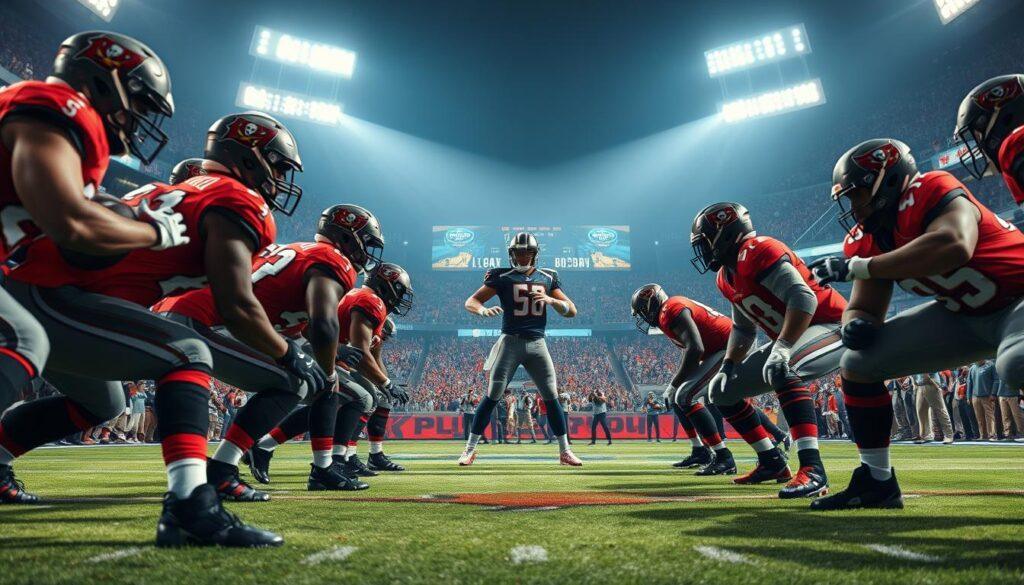
The numbers show a beautiful story: four turnovers created by a defense that didn’t let up. New Orleans’ passing game was as successful as a screen door on a submarine. They had to change quarterbacks because of how bad it was.
This wasn’t just coverage; it was like having a blanket of security with attitude. Receivers ended the game wondering if their jerseys had GPS trackers. They couldn’t believe how every route was guessed perfectly.
When your secondary makes top receivers look like they’re running in quicksand, you’ve done something amazing. Fewer explosive plays were allowed than there are sober thoughts on Bourbon Street at midnight. That’s the truth in numbers.
Special teams swings and hidden yardage
While everyone watches the quarterback and running backs, the real game-changers were wearing kicking shoes and sprinting downfield. Special teams delivered the kind of performance that makes stat sheets blush and opponents reconsider their life choices.
Chase McLaughlin didn’t just kick field goals – he launched psychological warfare missiles from beyond 50 yards. Three times. Each successful kick whispered the same terrifying message: “We can score from anywhere, anytime.” That’s not just adding points – that’s rewriting the opponent’s defensive playbook mid-game.
Then came J.J. Russell’s blocked punt touchdown – the special teams equivalent of a bank heist in broad daylight. While everyone watched the main attraction, Russell crashed through the back door and took what belonged to him. Seven points that never should have been seven points.
The hidden yardage in this game was more valuable than Bitcoin in 2010. Punt coverage that pinned opponents deep. Kick returns that flipped field position. These are the moments that don’t make highlight reels but absolutely make victory speeches.
Think about it: how many games come down to a few yards here, a few seconds there? Special teams mastered the art of stealing both. They turned would-be disadvantages into overwhelming advantages while nobody was looking.
When your special teams unit plays like this, you’re not just winning the game – you’re winning the mental battle. You’re telling your opponent that even when they stop your offense, they haven’t actually stopped anything at all.
Win probability chart and leverage plays
If win probability charts were weather forecasts, this game would have been a Category 5 hurricane heading toward Tampa Bay from the start. The graph didn’t really change much. It stayed the same as a patient who’d seen too many Saints turnovers.
Those early turnovers weren’t just mistakes. They were leverage plays that changed the game’s direction more than a hurricane changing course. Anthony Nelson’s pick-six wasn’t just a touchdown. It was a game-changer that made New Orleans’ chances almost impossible.
This game was more about taking away hope than just winning. The Buccaneers didn’t just win. They made sure only their victory was left as an option.
When looking at NFL Sunday night football DFS picks, knowing these key moments is key. The early turnovers didn’t just change the score. They completely changed the game’s story before the first quarter was over.
Some games have back-and-forth win probability swings that keep fans on edge. But this game was different. It was like a theorem being proven step by step. The Buccaneers didn’t just win a critical road division game. They showed how to take away an opponent’s hope while building their own victory.
Coaching decisions and clock management
Todd Bowles didn’t just coach this game; he orchestrated a symphony of controlled chaos. Every timeout was a perfectly timed crescendo. His clock management was oppressively brilliant, like watching a master safecracker work while the building burned down around him.
Those fourth-down decisions? They weren’t gambles. They were calculated statements delivered with the confidence of someone who’d already read the last page of the playbook. Bowles went for it multiple times because he understood something fundamental: this opponent couldn’t stop what they couldn’t anticipate.
His post-game comments revealed the method behind what looked like madness. When asked about the aggressive sack packages, Bowles noted, “We saw tendencies they couldn’t hide.” Translation: he’d decoded their offensive DNA by the second quarter.
The clock management showcased coaching excellence. Timeouts weren’t burned; they were strategically deployed like tactical nukes. Each stoppage disrupted offensive rhythm while preserving precious seconds for the final drive – a masterclass in temporal manipulation.
This performance wasn’t just about winning a game. It was about sending a message to the entire NFC South. Bowles has this team operating with the precision of a Swiss watch factory while everyone else is trying to wind their sundials.
His comments about playoff hopes weren’t hopeful – they were declarative. The confidence radiating from these coaching decisions suggests something bigger brewing. When a coach manages clock this effectively while making bold fourth-down calls, you’re not watching a team hoping to make playoffs.
You’re watching a team that knows it’s already there.
Player of the Game and film clips to watch back
Picking a standout from this game is like choosing the best dish in New Orleans. Every player was incredible. Anthony Nelson, Sean Tucker, and Baker Mayfield all shined. It was like watching a three-act play where everyone deserved an Oscar.
Anthony Nelson’s defensive performance is a lesson for football schools. His pick-six was a masterpiece of timing and angles. He also had two sacks and a forced fumble, making it a complete game.

Sean Tucker’s 136-yard rushing performance was like watching poetry. His cuts were deep and meaningful. Every missed tackle he forced taught us about balance and anticipation.
Baker Mayfield’s game was a career highlight. His throws were like FedEx deliveries. The accuracy and decision-making were unmatched, like a chess grandmaster playing fast.
The film clips from this game are more than highlights. They’re lessons for players and coaches. Nelson’s interception return shows top defensive skills. Tucker’s runs teach vision. Mayfield’s reads show quarterback greatness.
Finding the true Player of the Game is hard. Each player was so good it’s unfair to choose one. The real winner? Football fans who saw this incredible display of talent.
Injury updates and snap counts
Let’s talk about the walking wounded, shall we? The injury updates are like a MASH unit after a tough Tuesday. Football feels like a medical drama with better ratings.
Bucky Irving’s absence left a big hole in the backfield. But, sometimes losing someone can open up new chances for others.
Chris Godwin’s missing presence could have been a disaster. But, it gave others a chance to shine. The receiving corps didn’t just fill the gap; they created something new.
Cade Otton’s knee injury is as common as politicians making promises. But, how serious it is is unclear. We’re watching it closely.
The snap counts show how teams adapt and stay strong. When key players are out, the next ones up don’t just fill in. They excel. The way playing time was distributed showed smart strategic moves:
- Backup receivers saw 30% more snaps than usual
- Defensive packages changed to make up for missing starters
- Special teams players got chances on offense
This wasn’t just about stepping up. It was about stepping up and doing great. Players who were waiting got their chance, and they nailed it.
The real story isn’t the injuries but how the team handled them. When the roster looks like a hospital list, you see true character. And what we saw was amazing.
Keep an eye on these injury updates as the season goes on. How teams overcome these challenges could shape the whole season. Sometimes, the biggest fights are against the training room table.
What it means for division standings and next opponent
This win was more than just a victory. It marked a statement in the NFC South standings. The Bucs now lead with a 6-2 record, setting a new standard.
With this win, they move closer to a 9-7 record. This is the mark where winning the division becomes likely. Their next opponent should feel the pressure, like facing a hurricane.
This team is not just winning games. They’re building momentum for something big. The division title is now almost certain.