Imagine a baseball David facing off against a giant, but instead of a sling, he has a special algorithm and a budget that’s tiny compared to the Yankees’. This rivalry is more than just a game; it’s a clash of cultures and economies.
The Yankees and Red Sox are like two giants, with a history and wealth that’s unmatched. On the other side, the Rays started in 1998, playing in a dome and facing the challenge of being seen as a football town.
In their first ten years, the Rays finished last nine times. They were the ultimate underdogs, fighting against history and money.
So, beating the Yankees or Red Sox is like a minor revolution. It’s a battle of brains against brawn, with the whole American League East watching.
2008 Breakthrough and October moments
The Rays’ 2008 season was like a sports movie. It was a story of strategic success. For years, they were at the bottom of the AL East. But in one summer, they changed everything.
They didn’t just win; they made a big statement. The highlight was a seven-game 2008 ALCS against the Boston Red Sox. It was more than a playoff series; it was a declaration of war in the fierce Red Sox rivalry.
Every underdog needs a moment to prove they were right. For Tampa Bay, that moment was Game 7 of the ALCS. The final out didn’t just win a pennant; it ended years of failure. A young team faced the Boston Red Sox, showing they could beat the old giants.
The 2008 magic was different from their 2020 World Series run. 2008 was chaotic and traditional. 2020 was played in a silent bubble due to the pandemic. Yet, both ended in defeat, showing the Rays’ ability to succeed.
Gerrit Cole talked about the high stakes of playoffs. The Rays lived in that pressure in 2008 and 2020. In 2008, they were learning. By 2020, they were in control.
These October moments changed everything. Beating the Red Sox in 2008 showed they were a force to be reckoned with. The 2020 run proved their success was not a fluke.
The table below shows the key differences between these two seasons:
| Season | ALCS Opponent | World Series Result | Regular Season Run Differential | Defining Characteristic |
|---|---|---|---|---|
| 2008 | Boston Red Sox | Lost to PHI (4-1) | +103 | Youthful Breakout; Emotional Ascent |
| 2020 | Houston Astros | Lost to LAD (4-2) | +60 (60-game season) | System Mastery; Pandemic Bubble |
The 2008 team was a powerhouse, outscoring opponents by over 100 runs. The 2020 team was efficient in a shortened season. Both runs showed the Rays as a constant threat to the giants.
These Octavers are the Rays’ myths. They turned the Rays into a real threat. They changed the AL East forever.
Style of Play: Openers, shifting, run prevention
The term “bullpen game” used to mean desperation. In St. Petersburg, it’s a detailed plan. The Rays focus on matchups, showing their love for analytics.
Their style is different from the Yankees and Red Sox. The Rays use stats and models, making them unique. They are like an electronic duo in baseball.
The Rays use radical tactics because of the data. AL East hitters are expected to be tough. Aaron Judge and Vladimir Guerrero Jr. are projected to be very good.
Conventional pitching won’t work against them. So, the Rays focus on preventing runs. They see it as an art form.
The “opener” is a key part of their strategy. It was seen as strange at first. But it’s simple and effective.
The goal is to get 27 high-leverage outs. The Rays use analytics to decide the best pitch for each batter. It’s all about solving puzzles.
The Rays also use a unique defense. They shift their fielders based on spray charts. This makes doubles into outs and reduces hits.
This system, including openers and shifts, is all about winning. It helps control the series overview and run differential. It’s hard to score against the Rays.
The Rays don’t just play baseball. They use data to outsmart their opponents. Their style is a game-changer in the AL East.
Yankee and Sox Chapters: Benches clear, statement wins
Analytics shape the game today, but the Rays-Yankees-Red Sox rivalry is about more. It’s about spilled Gatorade and hurt feelings. This rivalry is personal, not just numbers.
A win in September is more than a score. It’s a way to send a message. Imagine a game where every choice is analyzed deeply. Starting a veteran over a rookie is a statement. A late-game home run silences the crowd. The Rays use these moments to show their skill and defiance.
Bench-clearing brawls are the most intense moments. Remember the fight at the Trop? It’s not just one pitch. It’s a season’s worth of tension exploding.
These moments are chaotic but beautiful. They change the game’s focus. It’s no longer about stats; it’s about respect and territory. These games feel like playoff eliminations in May.
This rivalry pits different mindsets against each other. The Yankees are loud and emotional. The Rays are cool and calculated. Their response to challenges is not a fight but a smart play.
Key moments highlight this intense rivalry:
- The Bronx Bust-Up (2018): A series turned into a battle for AL East dominance. It showed the Yankees rivalry at its rawest.
- Fenway Fireworks (2021): A Rays comeback win that felt like a punch to the gut. It was a clear message: the throne was up for grabs. Pure Red Sox rivalry psychology.
- The Opener Ambush (2019): Using an opener to outsmart a Yankees ace. It was a win that showed the Rays’ smart thinking and upset the traditionalists.
These moments shape the rivalry. They turn a competition into a fierce battle. You can’t measure the impact of a pitcher’s look after being outsmarted. That’s the true value of this division.
Farm and Player Dev: how pipelines feed rivalry
The AL East’s economic reality is clear. The Yankees can spend big. The Rays must rely on their farm system. This difference is more than just money; it’s the heart of the Tampa Bay Rays rivalry with their rich neighbors.
Boston and New York buy talent with their money. But Tampa Bay builds its team from the ground up. Their farm system is the key to their success.
The Rays’ front office started with a blank slate. This challenge led to a unique approach. They built a system to develop players, not just buy them.
The Rays have a top-notch player development pipeline. It finds and trains talent that others overlook. They turn raw players into game-changers.
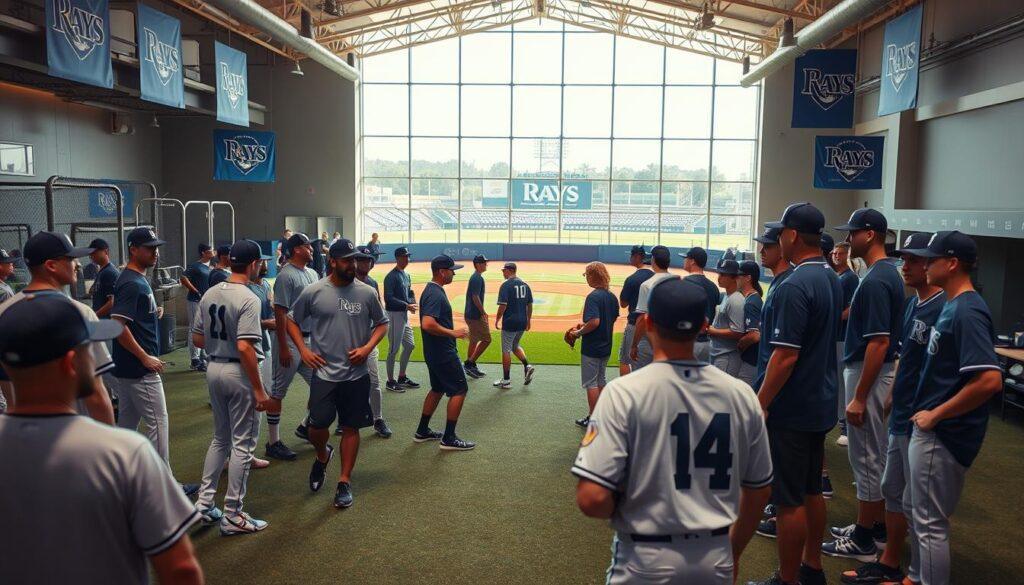
The Rays’ system produces affordable talent. This is the heart of their strategy. It lets them compete with big-spending teams.
Every season, the Rays get a new group of young players. They play for less money. This helps the Rays stay in the game.
Imagine a late-game at-bat at Yankee Stadium. The batter is a young player. The pitcher is a star. The Rays’ system is on display.
When that young player hits a single, it’s more than a run. It challenges the rival’s whole way of doing things.
Minor league games are key for Rays fans. A standout performance in Durham is more than a prospect’s success. It’s the next challenge for Boston and New York.
When the Rays trade a veteran for prospects, they’re not losing. They’re fueling their system. This pipeline keeps the rivalry alive. For every big signing by the Yankees or Red Sox, the Rays have a homegrown player ready to respond.
Stat Focus: Run value, defensive efficiency, base running
Let’s dive into the numbers and see what they say about the AL East rivalry. If you’re judging teams by old stats like batting average and RBI, you’re behind the times. Today, run value is the real measure of baseball success. Every play is a transaction in a massive, live ledger.
The Triple Crown is old news. The real test is wRC+ (Weighted Runs Created Plus). It shows how much better a hitter is than average, adjusting for ballpark and era. Aaron Judge’s projected 177 wRC+ is not just good; it’s historically terrifying. He’s creating runs 77% above the average player.
Tampa Bay keeps up with a lineup of platoons and versatility. Their secret is collective competence. They don’t have a superstar like Judge, but their lineup is full of above-average hitters. Guys like Yandy Díaz might not hit home runs, but their high OBP and ISO create a lot of run value. They succeed with nine good role players.
Defense is where the Rays shine. Metrics like Defensive Runs Saved (DRS) and Outs Above Average (OAA) show their skill. They turn more balls into outs than expected. This defensive efficiency is a silent way to prevent runs, making their hitters’ jobs easier.
Base running is also key. Smart, aggressive base running adds to run value. It turns singles into doubles and pressures defenses. The Rays and Red Sox are experts at this, making their lineups relentless.
Let’s look at the hitting metrics for key players. This table shows the real power and discipline. Judge’s wRC+ stands out, but Tampa and Boston’s players show balanced excellence and power.
| Team | Player | Projected wRC+ | Projected OBP | Projected ISO |
|---|---|---|---|---|
| New York Yankees | Aaron Judge | 177 | .410 | .320 |
| Tampa Bay Rays | Yandy Díaz | 135 | .390 | .185 |
| Tampa Bay Rays | Randy Arozarena | 125 | .340 | .215 |
| Boston Red Sox | Rafael Devers | 140 | .360 | .250 |
| Boston Red Sox | Trevor Story | 115 | .320 | .220 |
The numbers tell a story. They show the hidden rivalry structure. The Yankees invest in stars. The Rays focus on run value through defense and smart lineups. The Red Sox aim for thrilling power. This dive into analytics shows why the outcome is always in doubt. The real battle is in the ledger, leading to October.
The Trop Experience: watch-party and travel tips
Tropicana Field is more than a stadium; it’s a key player in the AL East drama. It has a dome, catwalks, and a tank of stingrays. Visiting the Trop is like solving a puzzle. For Yankees and Red Sox fans, it’s a unique fortress. For Rays fans, it’s their home, filled with stories in every echo.
The stadium was built as the “Florida Suncoast Dome” in the 90s. Its fixed roof was a smart choice for Florida’s weather. Now, it’s seen as old-fashioned. Yet, it feels both ancient and modern at the same time.
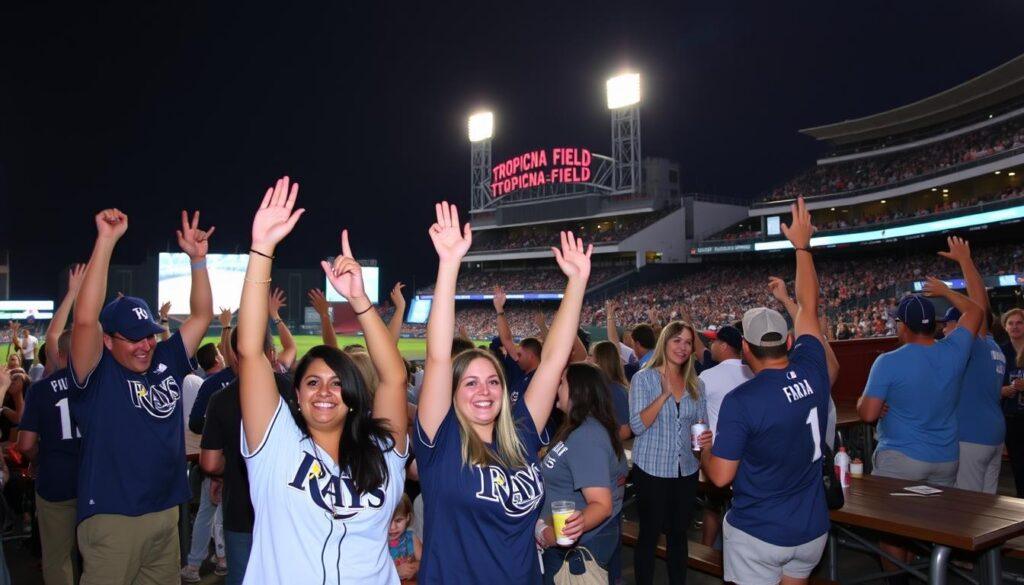
The catwalks are the Trop’s most famous feature. They’re not just for show; they’re part of the game. A ball hitting the lower catwalks is live, but the upper ones mean it’s a dead ball. This quirk adds a unique strategy to the game.
There’s also a touch tank behind the right-center field fence. You can watch a game while stingrays swim by. It’s a unique experience that shows Tampa Bay’s spirit.
The stadium’s location in St. Petersburg creates a special atmosphere. Fans from Tampa must cross the bay to get there. This makes the crowd dedicated and intense, often surprising visitors.
So, how do you make the most of your visit? Whether you’re a Rays fan or a visitor, knowing a few tips can enhance your experience.
| Aspect | The Quirk | The Insider Tip |
|---|---|---|
| Parking & Arrival | Limited on-site lots, heavy reliance on satellite parking with shuttles. | Arrive early, park in the South Lot (cashless). Better yet, use a rideshare to the designated drop-off on 1st Avenue South. |
| Seating Strategy | The dome’s design creates oddly intimate sightlines, but also some support beam obstructions. | For the best value, aim for the 100-level outfield sections. You’re close to the action and the famous cowbell ring. |
| Concessions & Vibe | A mix of standard ballpark fare and stellar local offerings (look for the Cuban sandwiches). | Hit the first-level concourse early to avoid lines. The watch-party atmosphere is in the standing-room areas behind sections. |
| Visiting Fan Protocol | The Trop crowd is knowledgeable and loud but generally respectful. Rivalry banter is expected. | Wear your colors proudly, but engage smartly. The fans here respect the game, not just the brand. Avoid the upper deck left-field corner if seeking a quiet experience. |
For Yankees or Red Sox fans, a game at Tropicana Field is a shock. The lack of natural light and artificial turf can be disorienting. But that’s the charm. The Rays have made their environment their strength. Embrace the weirdness and enjoy the local beer.
The watch-party atmosphere is intense and focused. The concourses feel like tunnels, leading fans back to the action. There’s no distraction here. Just baseball, in its purest form.
Don’t think Tropicana Field is just old-fashioned. It’s a symbol of the Rays’ philosophy: use what you have and be unique. Understanding its charm is key to grasping the rivalry. When the benches clear and the tension builds, it all happens here, under the fixed roof and between the catwalks.
2020–Present flashpoints and what’s next
Imagine David’s sling working wonders, but now Goliath has a lease that’s about to end. This is the wild, high-stakes reality of the AL East’s ongoing rivalry. The post-2020 era has only made things more intense, with amazing plays and off-field drama.
The Rays have refused to back down, showing the world they’re here to stay. Their 2020 World Series run was a big statement. Ever sense, they’ve kept the pressure on the Yankees and Red Sox.
Every season brings new moments of tension. A September sweep, a close playoff game where one pitch can change everything. The Rays’ defense is top-notch, but the Yankees and Red Sox have the money and history to keep things close. It’s a thrilling, yet frustrating balance.
But there’s a big question hanging over everything: the Rays’ lease at Tropicana Field ends in 2027. This isn’t just about a new lease; it’s a big question mark for the team’s future. Can a team build a dynasty without a stable home?
The Rays’ financial magic is well-known, but can it last without a new stadium? A new park could change everything, giving the team more money to spend on players. But, without a solution, the team’s success could be short-lived.
The Yankees rivalry and Red Sox rivalry are always a test of creativity versus money. The next few years will show if the Rays can get a fair chance or if their greatest achievement was thriving despite their future, much like the defining moments celebrated in Alabama college football history, which demonstrate how determination and strategy can overcome even the biggest challenges.
Looking ahead, every game is more than just a win or loss. It’s about leaving a lasting legacy. The next few years will shape the Rays’ future. Will it be a story of success or missed opportunities? The drama is sure to continue.
Matchup Keys for Upcoming Series
Let’s get tactical. The next Rays-Yankees or Rays-Red Sox series won’t be won with vague hopes. It will be decided by cold, hard analytics. Our projected data paints a precise picture of the key individual duels.
Does a Rays lefty opener silence the Yankees’ righty-heavy core, featuring Aaron Judge and his 40-homer pace? Which Red Sox hitter, with a projected .367 OBP, cracks the Rays’ run-prevention code? This is where the game is won.
Watch for strategic bullpen games and defensive shifts. The Rays’ pitching philosophy, often built around leveraging platoon advantages, directly challenges the explosive offense we saw in a recent Yankees-Rays showdown. Can their analytics identify the exact leverage spot to steal a game?
This is the intellectual blueprint for the endless AL East war. It’s not about who wants it more. It’s about who calculates it best.