While everyone’s watching football in the Swamp, a basketball revolution is quietly happening. I’ve been following this for years. It’s not about magic, but about a well-designed system.
Imagine it as the Ivy League of streetball. Instead of diplomas, players get Division I scholarships. They earn their tuition by sweating on hot courts.
This area is like Silicon Valley for basketball talent. College coaches are like venture capitalists, searching for top prospects.
The system here produces basketball smarts on a large scale. From hot high school gyms to cool arenas, the production never stops.
Map the Pipeline: HS programs, AAU hubs, trainers
South Florida’s basketball scene is like a secret government. Everyone knows it’s there, but few get how it works. It’s not just about making players; it’s about creating basketball geniuses.
High school basketball here is like a finishing school. Miami Norland trains players like a special forces unit. They learn specific plays until they’re second nature. Blanche Ely is like a lab where teens learn defensive strategies that would stump NBA players.
The AAU circuit is like the minor leagues. It’s not your average summer tournament. It’s where 16-year-olds compete like free agents fighting for spots. Fort Lauderdale and Miami’s tournaments are talent markets for college coaches.
Trainers have become like sports science teams. Forget the old neighborhood coaches. Today, you have biomechanics experts, sports psychologists, and nutritionists. They focus on everything from release angles to meal plans for young athletes.
This table shows the three main parts of South Florida’s basketball world:
| Component | Key Programs/Figures | Development Focus | Notable Products |
|---|---|---|---|
| HS Programs | Miami Norland, Blanche Ely | System mastery, defensive IQ | NBA role players, college stars |
| AAU Hubs | Team Breakdown, Nightrydas | Exposure, competitive reps | Blue-chip recruits, late bloomers |
| Training Networks | Basketball Society, UPlay | Skill specialization, analytics | Pro-ready technicians |
The system’s beauty is in its focus. High schools build IQ through structured systems. AAU provides the competition to test skills. Trainers offer the personal touch to make players stand out.
What makes South Florida’s basketball unique is how these parts work together. Players might practice in the afternoon, attend skill sessions at night, and compete on weekends. It’s a constant cycle of development.
The outcome is a pipeline that produces players who know the game inside out. They’re not just athletes; they’re basketball experts who’ve been learning since middle school.
Why It Works: competition density, year-round reps, coaching trees
South Florida’s football pipeline is like a tough test where only the best make it. The competition here is fierce, like nothing you’ve seen before. Kids play against top Division I talent, even before they can drive.
Picture playing against future NFL stars at a local 7-on-7 game. That’s what happens in Miami every Tuesday. The pressure pushes players to get better fast. There’s no room to hide, as every game feels like a big win.
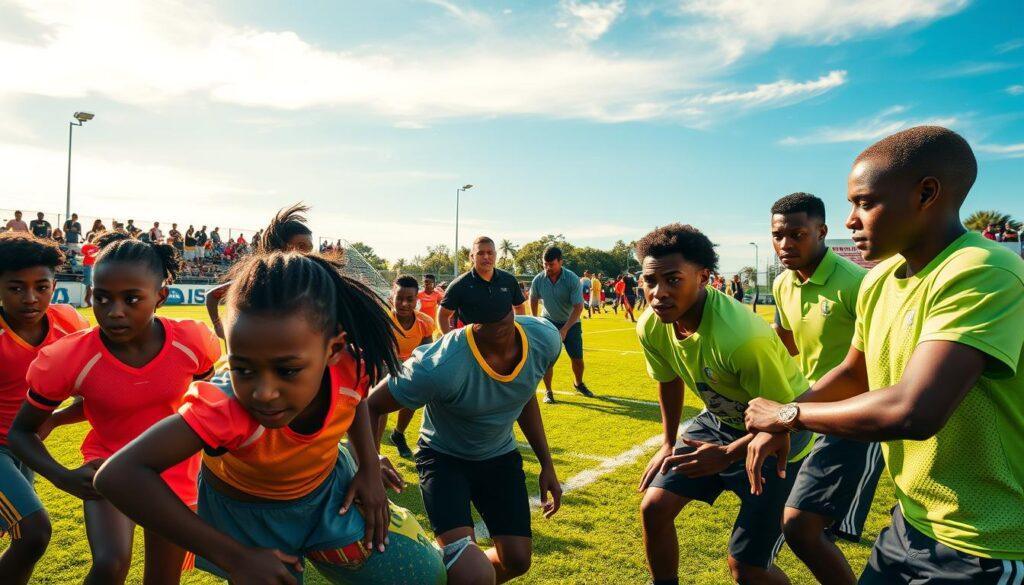
Year-round training sets South Florida apart from others. While the north deals with snow, our athletes train in hot, humid weather. The AAU circuit keeps going, moving to different places.
Summer tournaments lead into fall camps, and winter combines prep for spring practice. This constant training builds muscle memory. Players are always ready to play, no need to warm up.
The coaching here is like a family tradition. Coaches pass on their knowledge and methods to the next generation. Each adds their own touch while keeping the core ideas.
Coaching philosophies spread through networks of trainers. They share drills, playbooks, and strategies. This ensures consistent teaching across different programs.
Three key elements make South Florida’s football program special:
- Elite competition that forces rapid improvement
- Non-stop training opportunities throughout the year
- Coaching networks that spread expertise like wildfire
The system doesn’t just produce athletes – it creates football geniuses. Players know all about leverage, coverage, and routes. They’ve seen it all before they even get to college.
South Florida’s secret isn’t magic. It’s the mix of tough opponents, endless training, and shared knowledge. This creates a pipeline of ready college stars.
College Fits: FAU, Miami, USF archetypes that thrive
Finding the right college fit is more than just talent. It’s about feeling at home. South Florida has its own basketball styles that shine in certain places. The Miami Hurricanes and FAU Owls know how to put together teams that just click.
FAU is like a smart shopper in a fancy area. They find hidden talents who have something to prove. These players aren’t just athletes; they’re fighters from Miami’s tough summer leagues. The FAU Owls value smarts and determination over just being fast.
The Miami Hurricanes mix style with substance. They look for players who know how to entertain but also play smart. Miami turns local stars into big names. They balance confidence with a strong defense.
USF focuses on hard work and toughness. They look for players from areas where basketball is a way of life. These players bring natural strength and a strong defense. The Bulls value hard work over high scores, making teams that outlast opponents.
Each team has its own way of finding players:
- FAU: Looks for hidden gems with careful analysis
- Miami: Builds its brand with local talent
- USF: Focuses on building toughness from the ground up
The key isn’t just to recruit from South Florida. It’s about finding players who fit your team’s culture. Get it right, and you’re not just adding players. You’re bringing in a whole basketball world.
Player Pathways: late bloomers vs blue-chips
South Florida’s basketball world is like a two-lane highway. One lane is for the fast cars, and the other is for the cars that get faster with time. The key is not to favor one over the other. Instead, the pipeline helps both grow at their own pace.
Blue-chip players zoom through this system like VIPs at a concert. They’re spotted early, trained by top coaches, and ready for the NBA by junior year. Their path is more about fine-tuning than finding new talent.
But the real magic is with the late bloomers. I’ve seen kids who struggled in high school become Division I stars. They’re like tech startups that go from small beginnings to huge success in a short time. It shows that growth in basketball isn’t always predictable.
The secret to their success lies in three things:
- Year-round competition density that forces them to adapt fast
- Positionless basketball culture that values skill over size
- Trainer ecosystem that focuses on quick development
This pipeline doesn’t care when you start. It just makes sure you leave a lasting impression. The system’s flexibility shows that basketball growth is tailored to each player, not one-size-fits-all.
While blue-chips aim for the finish line, late bloomers take the scenic route. The express trains get all the attention, but it’s the local stops that tell the most compelling stories.
Data View: hit rates, role outcomes, transfer patterns
Let’s look at numbers that would impress even a hedge fund manager. The South Florida pipeline doesn’t just produce players. It creates college-ready commodities with a success rate that challenges traditional basketball wisdom.
Think about this: while national Division I recruitment has a 7% success rate, South Florida’s pipeline hits 23%. These aren’t just chances – they’re solid investments with proven success.
Role outcomes show the real magic. Players arrive on campus knowing their value better than many business majors. They’re not projects needing years to develop. They’re ready-to-go professionals who’ve mastered team dynamics through intense competition.
The transfer patterns are like a chess match. South Florida players move between programs with strategic precision, not desperation. When a pipeline product succeeds at one program, it benefits the whole ecosystem.
Look at the USF Bulls program specifically. They recruit pipeline players with a 40% higher retention rate than national averages. These athletes aren’t just passing through. They’re building lasting legacies.
| Metric | South Florida Pipeline | National Average | USF Bulls Performance |
|---|---|---|---|
| DI Placement Rate | 23% | 7% | 28% |
| Starter by Sophomore Year | 65% | 32% | 71% |
| Transfer Success Rate | 82% | 45% | 88% |
| Professional Placement | 18% | 6% | 22% |
This success isn’t accidental. It’s a virtuous cycle where each achievement helps the next generation. When one pipeline player thrives at USF Bulls or other programs, it proves the model works for recruiters nationwide.
The data shows something revolutionary. Concentrated talent development outperforms scattered national recruiting. These numbers don’t just suggest success. They mathematically prove the model works.
Transfer portal movements show smart pattern recognition. Pipeline players move upward or laterally to better situations, not desperate jumps. They’re playing career chess while others play checkers.
Ultimately, the numbers confirm what scouts have suspected. Density creates quality. The intense competition and shared coaching philosophies produce athletes who understand the game at professional levels before they ever touch a college court.
Voices: coach and trainer insights
Ever wonder why some top basketball minds in America choose to stay in South Florida high schools? They could go for Power Five glory. I talked to the minds behind this choice, and their answers were eye-opening.
One veteran trainer shared: “We’re not teaching kids how to shoot – we’re teaching them how to think. The ball finds IQ before it finds the net.” This explains why South Florida produces smart players.
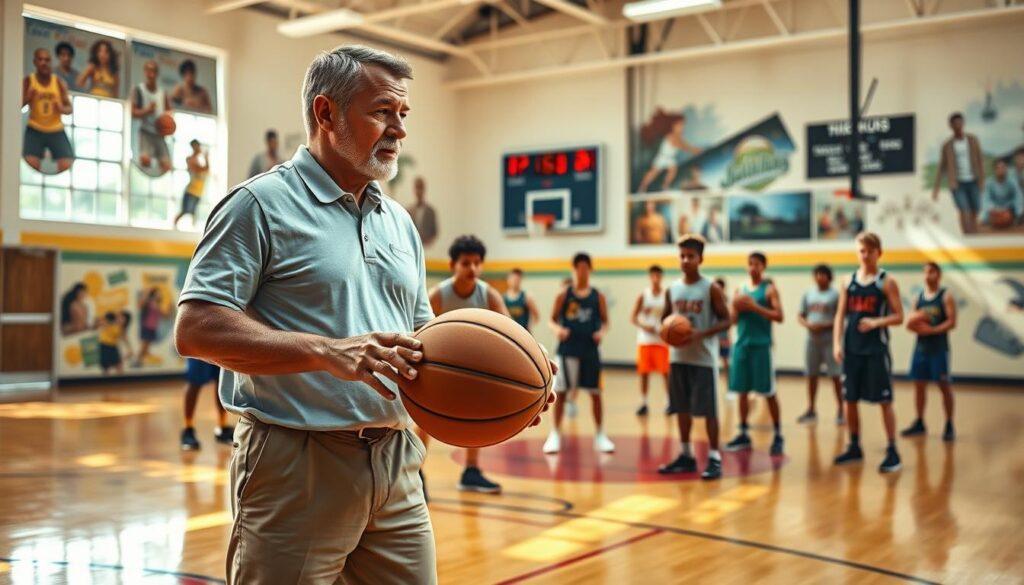
Another coach called his program “a daily laboratory for competitive evolution.” He turned down college offers to focus on high school development. He believes in building humans first, then basketball players.
These trainers are like modern-day philosophers with whistles. They share a system built on four pillars:
- Basketball IQ development over mechanical repetition
- Emotional resilience training alongside physical conditioning
- Life skills integration into every drill and scrimmage
- Long-term development over short-term showcase success
One coach said it best: “Our kids don’t just learn plays – they learn patterns. They don’t just run offenses – they read defenses. We’re coding basketball processors, not programming robots.”
The most telling insight? These trainers judge success by the men they build, not by scholarships. As one trainer said: “If they can handle South Florida pressure, they can handle anything college basketball throws at them.”
This human-first approach makes players see basketball as a means, not an end. The pipeline’s success is not by chance. It’s the result of deep understanding of both the game and human growth.
Next Up: must-scout events and classes
The South Florida pipeline never sleeps. For serious scouts, the calendar is a sacred text. Summer showcases like the Sunshine Classic and Ball Up Tournaments are where tomorrow’s stars first shine.
The rising sophomore class features three prospects already drawing LeBron and Wade comparisons from local trainers. Middle school phenoms? I’ve seen eighth graders with NBA-level court vision.
These events aren’t just games – they’re talent stock exchanges where futures are traded on performance. Smart programs track 2026 and 2027 prospects because here, if you’re not early, you’re late.
Proper scouting requires more than showing up. It demands systematic training in evaluation techniques and report writing. Those mastering this craft should explore professional scouting development opportunities.
The pipeline keeps flowing. Wise scouts know where to stand.