Let’s go back in time. Before the big wins and celebrations, the Battle of Florida was more like a friendly chat. Imagine two teams, both enjoying the sun, trying to understand ice hockey in Florida.
The Panthers had a magical run in ’96, but it seemed like a dream. The Lightning, on the other hand, struggled for a decade. It was like waiting for a slow-burning TV show to get exciting.
This so-called rivalry started because they shared a state and division. Even Interstate 75 connects their cities. For years, that was the main reason for their rivalry.
They had a forgotten trophy, called the “Sunshine Cup” or “Governor’s Cup.” It was like a participation trophy. It gathered dust while the real rivalry waited.
So, why did it take so long to start? One team saw success early, the other took much longer. The stage wasn’t ready for them. But the story was waiting to be told.
Playoff Sparks: Recent series that lit the fuse
Forget the regular season battles; the real rivalry drama unfolds in the playoffs. Over four years, the series has become a thrilling, intense saga. It’s not just a coincidence. It’s a four-act play where heroes turn villains and the Stanley Cup is a key player. The NHL playoffs Florida stage is where the “Sunshine State Showdown” truly shines.
The 2021 first-round series was the start of it all. Florida, the new kid on the block, faced Tampa Bay. The Lightning’s experience won out, taking the series in six games. This taught Florida a hard lesson: facing a dynasty is tough.
In 2022, Florida’s loss was a harsh wake-up call. The Lightning swept them, showing no mercy. It was like a knockout punch, leaving Florida stunned. The psychological impact was huge, making Florida’s regular-season wins seem insignificant.
But 2024 brought a surprise. Florida, wiser from past defeats, beat Tampa Bay in five games. This was more than a win; it was a statement of growth. Florida’s victory ride to their first Stanley Cup was a thrilling comeback.
The 2025 Stanley Cup playoffs were the final chapter. Florida met Tampa Bay again and won in five games. This confirmed Florida’s rise to power. They used their own championship experience to win again, solidifying their dominance.
So, what do these four playoff series tell us? They show a rivalry fueled by direct, painful lessons. Each series was a battle in a long war. Tampa Bay’s strategy and goaltending were key early on. Florida’s physical play and defense have been the recent game-changers.
The rivalry’s spark wasn’t from one moment but from constant battles. Meeting the same team year after year adds layers to every play. It’s personal and intense. This rivalry has grown into a national spectacle, with each game a must-see.
Systems Breakdown: 1-3-1 vs forecheck pressure
Hockey systems are like deep books. Jon Cooper’s 1-3-1 is like a book on calm determination. The Panthers’ forecheck is like a book on beautiful chaos. This rivalry is not just about sports. It’s about two different ways of thinking, played at high speed.
Tampa’s 1-3-1 neutral zone trap is like a strict rule. One forward presses the puck carrier at the blue line. Three players form a wall in the middle of the ice. The last defender cleans up any mistakes. It’s not about big hits but about being patient and making opponents make mistakes.
The Panthers’ forecheck pressure is the opposite. It’s like a wild, organized attack. Led by Matthew Tkachuk, they send two or three attackers deep into the zone. They aim to demolish any breakout attempts. It’s like a targeted heist.
When these two meet, it’s like a chess game. A Panther dumps the puck in, and the forecheckers rush. The Lightning’s defenseman tries to handle it, but Tkachuk is a big problem. He has no easy pass options.
This is the key moment. Does the defenseman pass it around the boards, or does he make a risky pass? Each shift is a test of which system wins.
Cooper’s system says chaos is predictable if you control it. The 1-3-1 limits rush chances and turns the game into a slow battle. The Panthers believe in creating chaos in the zone. They think relentless pressure will break any defense.
Is the 1-3-1 outdated, or is it the best answer to aggressive play? The answer is in the game. When it works, Tampa seems to play a different sport and win. When Florida’s forecheck succeeds, it feels like a dam breaking. This battle between systems is the heart of the rivalry.
Goalie Wars: High-danger save % and clutch stops
To understand the Sunshine State feud, look at the goal stoppers, not scorers. Andrei Vasilevskiy was key, turning games around with his saves. He was more than a goalie; he was a story changer.
Vasilevskiy’s high-danger save percentage was incredible. It made the net a no-fly zone. When Tampa’s defense was breached, Vasilevskiy was ready, stopping shots with ease.
His clutch stops were amazing. They left the Panthers’ bench deflated. It was hard to beat Tampa, even when playing well.
But what happens when Vasilevskiy falters? This is where the goalie war gets interesting. It’s no longer just Tampa’s defense. It’s a battle where every goal is a victory for the other team.
Look at the league. A shutout victory or a perfect game is more than a win. It’s a statement of dominance. In rivalries, a goalie’s performance can be the whole story.
In Sunrise, the Panthers’ defense has become strong. It’s not just about Vasilevskiy anymore. It’s about the Panthers’ growing goaltending strength against Vasilevskiy’s legacy.
Is goaltending in this rivalry becoming more unpredictable? Advanced stats suggest it might be. A goalie’s clutch performance can change from game to game.
This is the thin line between being a hero and a scapegoat. One game, you’re unbeatable. The next, you’re the talk of the post-game show. For goalies, every game is a test. The only review that matters is the goalie’s own performance.
Special Teams: PP/PK chess and net-front battles
Forget the elegant ballet of even-strength; special teams is where the NHL’s most brutal and brilliant chess match unfolds. It’s a two-minute microcosm of strategy, adaptation, and raw will. Think of it as high-stakes rock-paper-scissors, but the rock is a 100-mph slap shot and the scissors are a defender’s desperate stick.
The central duel pits the Tampa Bay Lightning’s typically surgical power play against the Florida Panthers’ penalty kill, fueled by forechecking pressure. Tampa’s unit operates on precision, looking for that one seam pass for a backdoor tap-in or a one-timer from the circle. Florida’s PK responds not with a defensive shell, but with an aggressive, disruptive swarm. Their mission is simple: shatter the Lightning’s rhythm before it ever establishes a setup.
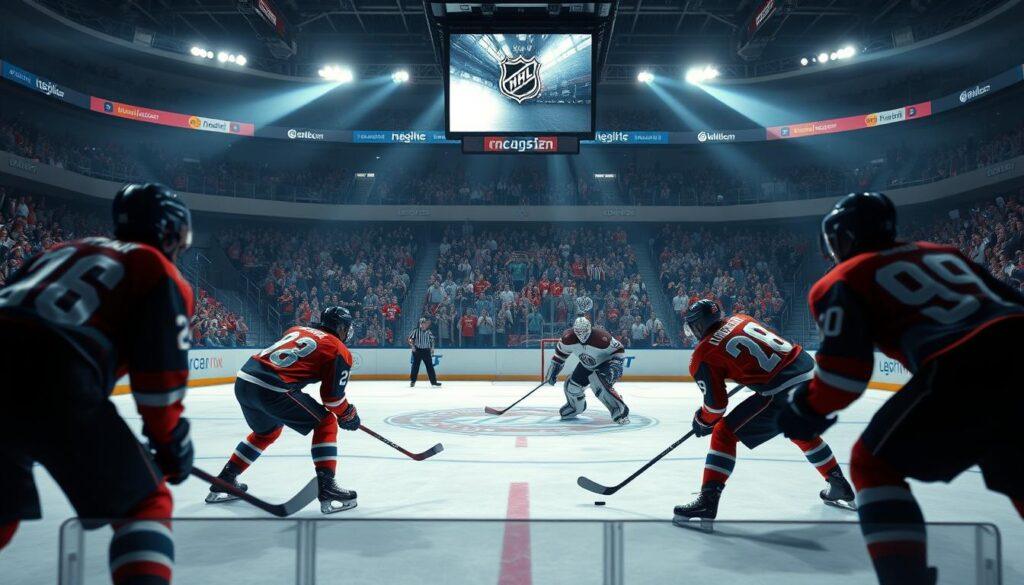
This is where the game within the game turns into a legal—and occasionally illegal—war for real estate. The most critical square footage on the ice during a power play is the area directly in front of the goaltender. The net-front battle is a subtle, violent ballet. Offensive players use their bodies as shields, while defenders cross-check, tie up sticks, and do anything short of a felony to clear the porch.
One elite shooter can tilt this entire balance. Consider Patrik Laine’s recent tear as a perfect case study. He tallied eight power play goals in a nine-game stretch, tying a franchise record for a month. That’s not just luck; it’s a demonstration of how a singular, world-class shooting talent forces a penalty kill to distort its entire coverage. Defenders must respect his shot from the circle, which opens passing lanes and creates chaos down low.
Laine’s outburst also highlights a key leaderboard. He trailed only Tampa’s own Brayden Point, who had 11 power play goals at the time, for the league lead. This stat isn’t trivial. It shows that in the special teams arms race, having that one unstoppable weapon is often the difference between a good unit and a season-altering one.
So, how does this chess match play out in our Sunshine State showdown? Florida’s PK tries to turn the game into a street fight, preventing Tampa’s skilled players from setting up shop. The Lightning, in turn, must use their puck movement to create just enough time and space for a Point or a Steven Stamkos to unleash hell. It’s a clash of philosophies: finesse versus force.
In the end, these short-handed sequences decide more games than any pretty tic-tac-toe passing play. They are the sharp, witty ad-libs in a long script—the moments of unexpected brilliance or catastrophic failure that everyone remembers. When the Panthers and Lightning meet, never look away during a penalty. The real show is just starting.
Star Impact: Kucherov, Point, Barkov, Tkachuk profiles
Without looking at Kucherov, Point, Barkov, and Tkachuk, it’s like missing the main stars in a movie. Each player has a key role, and it’s up to you to decide who’s the hero. Let’s dive into their stories.
Nikita Kucherov of Tampa is a hockey wizard. He sees the game in ways others can’t. His passes are like magic tricks, opening up the game in an instant. He’s the heart of the Lightning’s fast-paced play.
Brayden Point is Tampa’s go-to scorer. He’s like a surgeon, precise and timely. He led the league in power-play goals, showing his skill in finding open spots. Point makes Kucherov’s vision a reality on the scoreboard.
Aleksander Barkov of the Panthers is a defensive rock with an offensive spark. He’s a complete player, balancing defense and offense. His steady play helps his teammates thrive in Florida’s challenging environment.
Matthew Tkachuk, on the other hand, is a force of nature. He’s the Panthers’ wild card, always looking to disrupt the game. His competitive spirit is unmatched, and he scores in ways that unsettle opponents. Tkachuk’s play is all about raw, unfiltered competition.
So, how do these players shape the rivalry?
Does Kucherov’s creativity outdo Barkov’s solid play? Can Point’s precision break through Tkachuk’s chaos? It’s a battle of styles. Kucherov and Point are about skill and teamwork. Barkov and Tkachuk mix structure with a touch of wildness.
Their battles are at the heart of the rivalry. It’s not just about winning. It’s about how these stars influence their teams’ play, fight, and win.
Crowd Energy: Tampa vs Sunrise—ticket and travel tips
A Panthers-Lightning game is more than a game. It’s a mix of snowbird loyalty, sunbelt conversion, and Floridian chaos. To get this rivalry, you need to walk the concourse. The battle isn’t just on the ice; it’s in chants and highway stops.
Amalie Arena in Tampa is a masterclass in intensity. The production is sleek, and the fan response is thunderous. The energy feels like a continuous wave. It’s a show where even the organist knows crowd psychology.
The FLA Live Arena in Sunrise has a different vibe. It’s a growing, raucous, and slightly unhinged cacophony. The intensity is organic and intimidating for visitors.
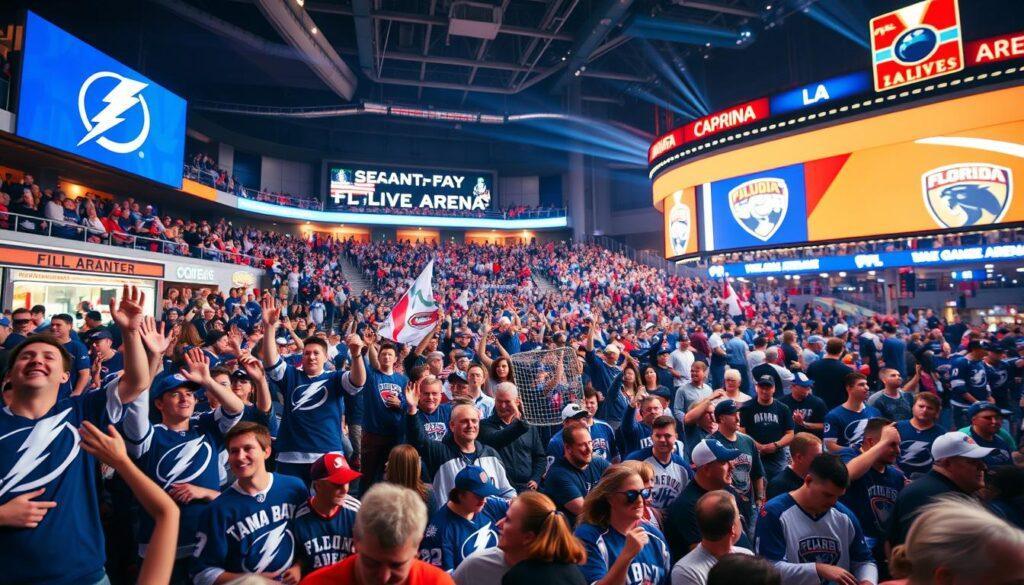
So, you’re making the I-75 pilgrimage? Bravo. Here is your slightly sarcastic survival guide.
- The Drive: The 250-ish miles between cities is a straight shot, but it’s Florida. Expect sudden downpours, drivers who ignore turn signals, and existential crises at service plazas. Plan for four hours, hope for three.
- Ticket Dynamics: This is a premium rivalry. Tickets for the visiting team’s barn will carry a tax. Your best bet? Target weeknight games or be ready when single-game sales drop. The secondary market is unpredictable—patience is a virtue and a money-saver.
- Pre-Game Fuel: In Tampa, skip the generic spots. Hit Sparkman’s Wharf for a beer and a view, or dive into the chaos of Hattricks downtown. In Sunrise, the Sawgrass Mills mall is a monument to consumerism, but the real action is at the increasingly rowdy bars just west of the arena.
- Jersey Etiquette: Wearing your colors in enemy territory is a rite of passage. Confidence is key. Good-natured ribbing is expected; taking the bait is not. Remember, you’re all Floridians first when discussing the humidity or the perplexing popularity of Jimmy Buffett.
This cultural divide extends to the ice, where the strategic battle mirrors the fan experience. For a deeper look at how Florida teams translate this energy into playoff success, check out this Stanley Cup Final preview that breaks down the high-stakes dynamics.
Attending this Sunshine State showdown is about more than hockey. It’s a study in how two cities, connected by a highway, build distinct tribal identities around the same sport. The crowd energy is the soundtrack. Your journey is the field research. Just remember to pack your patience—and maybe an umbrella.
Advanced Metrics: xGF/xGA, rush chances, expected goals
After all the action, who really comes out on top? Let’s look at the numbers. Advanced metrics give us the clear answer.
Expected goals (xG) shows us that not all shots are the same. A shot right in front of the goalie is worth more than one from the corner. This metric helps us see the real value of each chance.
Does Florida’s many shots really lead to high xG, or is it just random? Or does Tampa’s careful play lead to top xGF? The stats tell us exactly what’s happening.
Rush chances and scoring chance differences highlight the importance of quick plays. They show which team makes the most of turnovers. They reveal the fast breaks led by Kucherov or Tkachuk.
This detailed look confirms the excitement of the rivalry. The data shows that this matchup is just as important as it feels, much like the iconic moments found in Alabama college football history, which demonstrate how individual plays and quick decisions can define a game. Advanced metrics give us the satisfaction of knowing this game matters on and off the ice.